Record-keeping under the EU AI Act
The record-keeping obligations for high-risk AI systems, in plain language. Four short pages.
Annex IV and Article 12
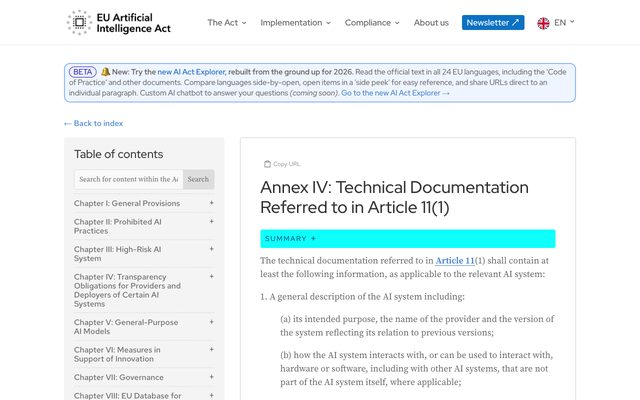
Annex IV sets out the technical documentation a provider of a high-risk AI system has to prepare and keep current under Article 11(1). It covers the system’s design, intended purpose, versions, performance, risk controls and changes across its lifecycle.
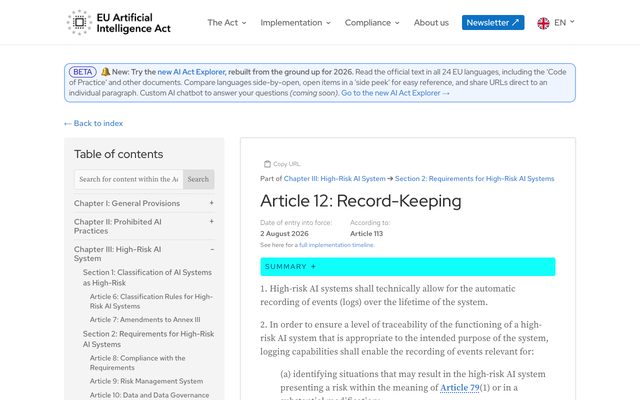
Article 12 requires high-risk AI systems to support automatic recording of events over their lifetime. The logging must provide traceability appropriate to the system’s purpose and support the monitoring functions named in the Article.
From obligation to useful evidence
The Act does not prescribe a complete replay of every AI decision. Article 12 requires logs relevant to traceability, post-market monitoring and monitoring the operation of certain high-risk systems. Annex IV establishes the documentation that describes the system, including its versions and changes.
Arkna’s view is that a consequential agent workflow needs enough evidence to reconstruct an identified run: what the system received, the steps it took, the version in use and any human intervention. That is an operational interpretation of useful traceability, not a quotation of the Act.
Policies are not a record
A policy states how a system is meant to operate. A dashboard usually shows current activity or aggregates. Neither alone establishes what happened during one identified run.
Arkna can rebuild what an agent did from records the agent did not write. The institution and its advisors decide whether the system and the outcome met their obligations.
Read the official text
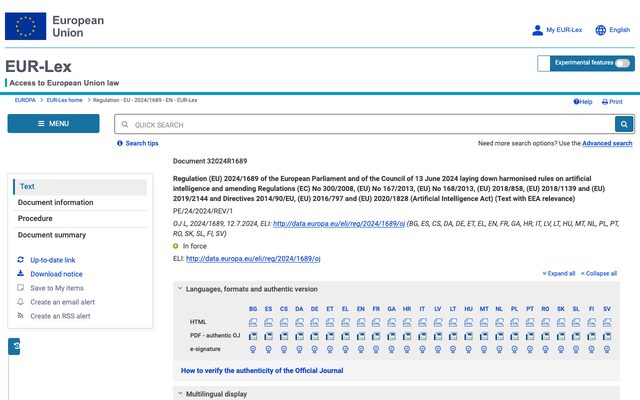
Regulation (EU) 2024/1689.